
The South African mini-roundabout (or mini-circle) has right-of-way characteristics similar to a stop junction. It is not well known and an occasional source of confusion for visitors and locals alike.
In normal roundabouts you simply yield to the traffic coming from the right. In the mini-roundabout the rule is subtly different, it is ‘first to arrive is the first to proceed’. If a vehicle is on the roundabout already (to your right) then you yield because it would have clearly arrived first, and so it feels like a normal roundabout. So why then this odd ‘yield to the first to arrive’ rule?

I can only hazard a guess that it must be connected to heavy traffic. If there is heavy traffic, then because of the small geometry there will be occassions when one lane is completely blocked because of traffic from the busy lane to the right. So the characteristics of a stop sign come in to play, and you may in fact have to yield to traffic on your left to let them proceed as they arrived first and have been waiting. This definitely feels odd on a roundabout! I have observed drivers making eye contact and negotiating with other drivers to decide who is to proceed and who is to give way. The natural question then arises, ‘Why not use a stop junction that everyone is already familiar with? I expect the reason is that vehicles flow more smoothly and efficiently on the mini-roundabout as one must only yield whilst you are required to stop at the stop junction. Not-just-bikes has an interesting take on stop junctions, ‘Stop signs suck and we should get rid of them’.
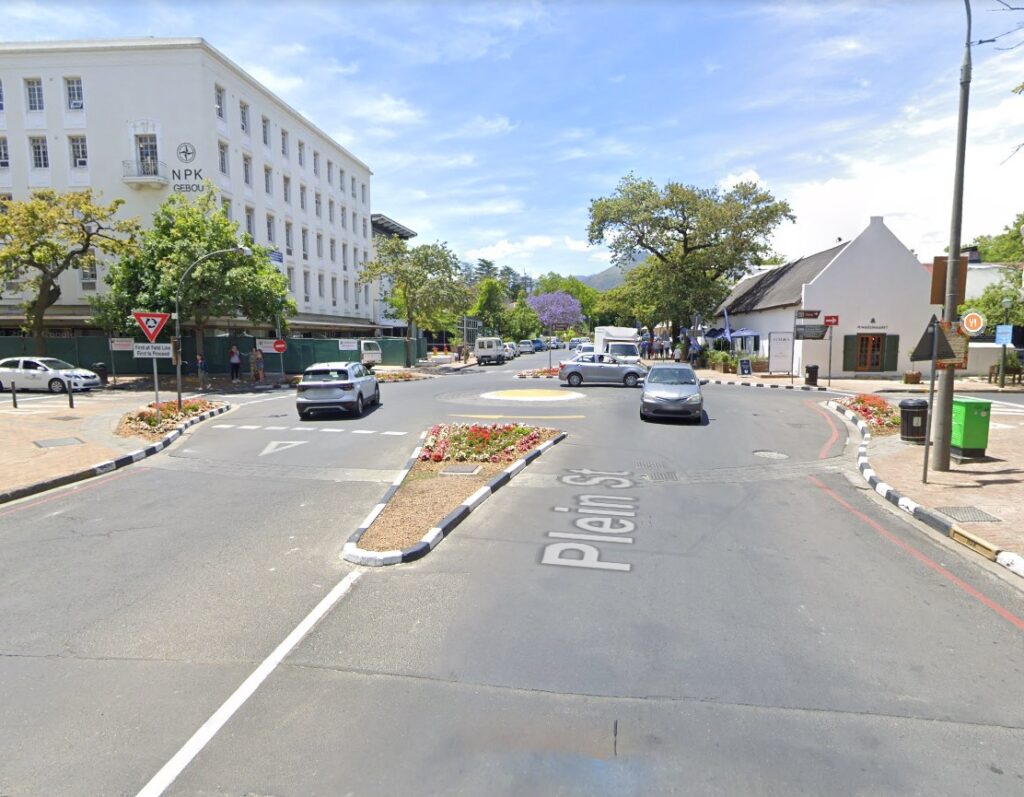
The two different types of roundabout have different signs, although the scale of the size of the roundabout is also an important characteristic to recognise the difference.


Leave a Reply